

Start with a reproductive-context handoff record
If you are postpartum, breastfeeding, pregnant, or planning pregnancy, begin with a reproductive-context record before comparing programme labels. Note which context applies, the questions you need a clinician to answer, and the daily-life constraints you want a programme to address. This record is not an eligibility test or a treatment decision. It keeps general programme information separate from the clinical conversation that must relate options to your history and current treatments.
Weight-management interventions vary substantially in their design and delivery. That variation means a format that works for one person may not suit your health context, schedule, finances, or preferences. Ask whether the programme explains who provides care, how often you receive support, what happens when your needs change, and how treatment decisions are made. Treat a large promise as a reason to ask better questions, not as a personal forecast.
A programme comparison starts with this opening test:
- Can you identify the assessment process before treatment begins?
- Can you see how nutrition, activity, sleep, and behaviour support fit together?
- Can you tell which parts are medical decisions and which parts are general guidance?
- Can you find the expected costs, coverage questions, and communication route?
- Can you understand what support continues if your first plan needs to change?
A programme that answers these questions gives you something concrete to evaluate.
Sustainable weight management is a fit question before it is a results question. Consider whether the programme leaves room for ordinary meals, changing schedules, family responsibilities, activity preferences, and periods when your routine is disrupted. A plan does not become more suitable simply because it is stricter. Look for an approach you can understand, discuss, and reassess with appropriate support.
Separate programme support from clinical decisions
A weight loss programme may combine lifestyle changes, nutrition and exercise guidance, behaviour-change counselling, coaching, medical assessment, medication, or another treatment option. For someone who is postpartum or breastfeeding, separate the parts you can inspect, such as support and communication, from decisions that require a clinician. Healthcare professionals often begin with lifestyle changes, while weight-loss medicines or surgery may help in some cases. The mix should be discussed in relation to your health history, current treatments, and reproductive context.
A structured programme may evaluate nutrition, eating behaviours, physical activity, and sleep, then provide counselling on behaviour change, nutrition, and exercise. A longer-term plan may also include anti-obesity medications, bariatric devices, or metabolic and bariatric surgery when appropriate. Those possibilities belong in a clinical plan rather than an online promise, because the available options depend on your circumstances.
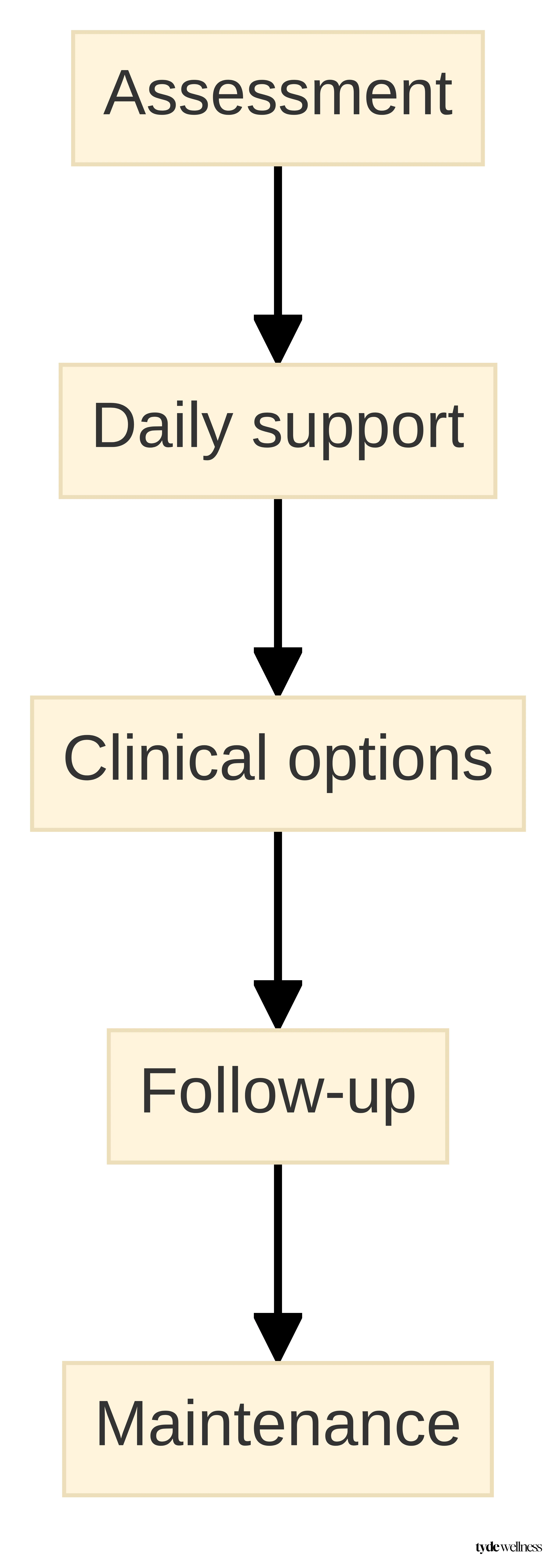
A programme comparison can use five parts:
- Assessment: What health history, weight history, current treatments, eating patterns, activity, and sleep does the intake cover?
- Daily support: What guidance helps you handle meals, movement, routines, and behaviour change?
- Clinical options: Does a qualified clinician explain when medication or another treatment could be considered?
- Follow-up: How will you discuss progress, unwanted effects, questions, or a change in plan?
- Maintenance: What conversation addresses longer-term management rather than only the first stage?
This map lets you compare components without assuming that more components automatically mean a better fit.
A programme can be comprehensive without offering every possible treatment. Lifestyle support may be the main focus, or a clinician may discuss medication or another option as part of a longer-term plan. Ask which components are actually available, which require a separate clinical decision, and what happens if the initial approach does not address your needs.
Assess the whole person before choosing an approach
A comprehensive assessment may consider your weight history, social and neuropsychiatric factors, possible secondary or genetic causes, and weight-related metabolic or biomechanical complications. That broader view matters because a programme focused only on a number may leave important context out of the conversation. Look for questions about your goals, previous attempts, current treatments, daily constraints, and health concerns before any treatment option is discussed.
Nutrition, eating behaviours, physical activity, and sleep are useful assessment areas, but they should not be treated as a complete explanation of your weight or your effort. A structured programme can use those areas to shape counselling and behaviour-change support. Ask how the programme turns what you share into practical guidance instead of handing you a generic list of rules.
Weight can be affected by many factors beyond lifestyle habits, and people may encounter weight stigma, including in healthcare. You should be able to describe your health and goals without being reduced to assumptions about willpower. A useful assessment makes room for respectful questions, acknowledges your circumstances, and explains which decisions require a clinician rather than assigning blame.
Your daily life is part of the context a programme needs to understand. A plan that ignores work patterns, caregiving, food access, sleep disruption, or activity limitations may be difficult to use even if its instructions sound clear. Ask whether the assessment gives you space to explain those conditions and whether the recommendations can be discussed in relation to them.
Before you join, ask: What information will you collect, who reviews it, and how will it affect the plan? If the answer centres only on weight and ignores health history, current treatments, daily life, or your goals, pause before treating the programme as a complete form of care. Use the answer to separate routine support from clinical review. Nutrition, eating behaviours, activity, and sleep can inform general behaviour-change guidance, while health history, current treatments, possible complications, and possible secondary or genetic causes belong in a clinician’s assessment. For a busy parent, write down one routine constraint and one health question before the intake. The first tests whether support is practical; the second tests whether the assessment goes beyond generic advice. Neither test predicts results, but both show what the programme is prepared to discuss.
Test support against changing postpartum routines
Support should be tested against the weeks you actually need to manage. For a postpartum or breastfeeding reader, describe the changing schedule, family responsibilities, meals, activity, and sleep questions you would bring to the programme; do not assume a general coaching promise answers a medication question. A comprehensive lifestyle programme may involve a trained interventionist or multidisciplinary team, with personalized nutrition care from a registered dietitian nutritionist. At Tyde Wellness, we offer real-time messaging with the care team; ask how that channel relates to scheduled clinical review and reproductive questions.
A practical support model should address the parts of life that make plans difficult: changing schedules, family meals, limited time, food preferences, activity barriers, and a week that does not go as planned. You are not looking for a rigid set of instructions. You are looking for a clear way to raise problems, receive guidance, and adjust the conversation without turning one difficult week into a reason to abandon the plan.
Communication is part of programme structure, not a minor convenience. At Tyde Wellness, we offer real-time messaging with the care team. When comparing any programme, ask how you can contact the team, what kinds of questions the channel is intended to handle, and how messages fit with scheduled clinical reviews.
A busy week is a useful test of the support model. Describe a normal week and ask what help would be available when meals, activity, or sleep do not follow the intended plan. The answer should identify the people involved, the communication route, and the kind of guidance you can discuss. Do not count a feature unless you understand how you would use it. For a busy parent or new mom, make that test concrete with a one-week support brief. Note the routine constraint most likely to affect participation, the nutrition or behaviour question you would want help with, the route for raising it, and the question that must go to a clinician. If you are breastfeeding, planning pregnancy, or pregnant, put that reproductive context at the top of the brief so it is not separated from treatment questions. This brief does not determine whether medication is appropriate or whether you are eligible. It shows whether the programme can address your actual circumstances and whether its boundaries are clear.
Personalization should be visible in the questions the programme asks and the way it responds to your answers. A registered dietitian nutritionist or another trained professional may have a different role from a clinician who reviews medical treatment. Ask who handles each part of your care so you know where to take a nutrition question, a behaviour concern, or a treatment question.
Build a clinician-handoff record
Use the record as a clinician handoff, not a programme score. Start with reproductive context and daily-life constraints, then mark which questions concern support, medication, monitoring, or access. Programmes and primary-care interventions vary substantially. The record’s purpose is to make unanswered questions visible for the right conversation, not to predict an outcome.
A comparison matrix can keep programme features separate from expected results:
| Comparison criterion | Lifestyle-focused approach | Clinician-guided approach |
|---|---|---|
| Assessment | May examine nutrition, eating behaviours, activity, sleep, and daily routines | May add medical history, current treatments, weight-related complications, and other clinical factors |
| Nutrition support | May provide general or personalized guidance for eating patterns | May combine nutrition care with a clinical review of treatment options |
| Behaviour support | May use counselling, coaching, or a trained interventionist | May combine behaviour support with clinical follow-up and treatment decisions |
| Treatment choices | Centres on lifestyle changes | May include lifestyle changes and, when appropriate, medication or another treatment |
| Questions to ask | Who provides guidance, how often, and how is it adapted? | Who assesses suitability, how are options monitored, and how can you raise concerns? |
| Long-term fit | How does the plan work with your routine and resources? | How does the plan address ongoing support, changes, cost, and communication? |
The two columns are not mutually exclusive. A clinician-guided plan may include lifestyle support, and a lifestyle programme may still require professional input. The comparison helps you identify what is present, what is missing, and what needs a qualified clinician’s explanation. Keep expected results separate from those answers because individual outcomes and suitability cannot be established from programme descriptions alone.
A short scorecard can use these headings: assessment, nutrition, behaviour support, clinical oversight, contact, cost, and longer-term planning. Under each heading, write the specific feature you can confirm and the question that remains open. This gives you a record of programme structure without turning an uncertain result into a guarantee.
A fair comparison also records what you cannot yet judge. Write down whether the programme explains follow-up, how it handles a change in circumstances, and which claims depend on individual clinical assessment. This keeps a polished website, a low price, or a large advertised result from standing in for information about how care is actually delivered. Use the record to choose the next question rather than to declare a winner. If assessment is unclear, ask what the intake covers and who reviews it. If support is unclear, ask who provides nutrition or behaviour guidance. If clinical oversight is unclear, ask who reviews health history and current treatments. If cost is unclear, ask which coverage and payment conditions remain. A programme can stay under consideration while an answer is pending, but an unresolved safety or reproductive question should remain with a clinician rather than being filled with assumptions.
Decide what needs a clinician’s review
A routine-first approach may be useful when the main question is how nutrition, activity, sleep, and behaviour support can fit changing days and family responsibilities. Ask who provides that support and how it can be adapted when the routine shifts. A simple format or low price does not answer medication, pregnancy, or breastfeeding questions; keep those for a qualified clinician.
A clinician-guided route adds questions about medical history, current treatments, possible interactions, treatment purpose, and follow-up. Medication may be part of an individualized plan, but general information cannot tell you whether a particular option suits you. Ask what assessment comes first, what alternatives will be discussed, and how the clinical team will respond if the plan needs to change.
The trade-off is not simply convenience versus medical care. A programme with fewer components may be easier to understand but may leave some questions for another professional. A programme with more components may offer a broader clinical discussion while requiring more appointments, information, or follow-up. Compare the actual responsibilities on both sides and decide which unanswered question deserves attention first.
The next conversation should address the uncertainty you need to resolve. If your main question is how to build workable routines, ask about nutrition and behaviour support. If your question involves medication, health conditions, current treatments, or a history of unsuccessful attempts, take those details to a qualified clinician rather than deciding from a programme label.
Put pregnancy and breastfeeding questions first
Put reproductive questions at the top of any medication conversation. Ask a healthcare professional about possible interactions and discuss all prescription medicines, over-the-counter medicines, and herbal products you take. Do not combine weight-loss medications with other products intended for weight loss unless a healthcare professional prescribes the combination. If you are pregnant, planning pregnancy, or breastfeeding, raise that context before discussing an option.
Pregnancy, plans for pregnancy, and breastfeeding belong at the beginning of the conversation, not as an afterthought. The selected NIDDK guidance says not to take weight-loss medications during pregnancy or when planning pregnancy, and says they are not recommended if breastfeeding. If you are postpartum, breastfeeding, or planning another pregnancy, tell the clinician before discussing medication.
A medication safety checklist can include these questions:
- Which of my current medicines, supplements, or herbal products need review?
- Could any health condition change the treatment conversation?
- What should I do if I become pregnant or begin planning a pregnancy?
- How does breastfeeding affect the options being discussed?
- What products should I avoid combining with a weight-loss medication?
These questions create a safety boundary without asking you to determine suitability on your own.
A general medication description is not permission to start, combine, continue, or stop treatment. Give the clinician a complete list of what you take and explain relevant reproductive plans before an individual decision is made. Treat this as a safety handoff: identify the products and reproductive context that need review, then ask the clinician to connect them with the option under discussion. Keep the resulting answer separate from general programme information. If the programme does not make clear where medication interactions, pregnancy planning, pregnancy, or breastfeeding questions are handled, record that gap rather than assuming that a coach, message channel, or promotional page can make the clinical decision. The unresolved point is a reason for a qualified clinical conversation, not a reason to infer suitability from a checklist.
Record access after the clinical questions
Access questions belong in the handoff record, but they cannot answer whether treatment is appropriate. Coverage may depend on your plan’s formulary, coverage criteria, qualifying documentation, physician-supervised support, and prior authorization. Keep payment questions separate from the reproductive and clinical review.
Cost is more than the price of a medication. [Ask a clinician about the medication’s purpose, route, dosing frequency, potential effects and side effects, interactions, and cost](https://www.tydewellness.com/learn/how-to-compare-weight-control-medications/), and ask how those issues relate to your history and current medications. Ask the programme to explain which services, follow-up, nutrition support, and communication are included in the price you are considering.
A pre-joining checklist can include:
- Whether weight-loss medication is included or excluded by your formulary
- Which documentation or qualifying health information may be required
- Whether physician-supervised support is part of the coverage requirement
- Whether prior authorization is needed
- How the programme handles costs that insurance does not cover
- Whether the route, frequency, and follow-up fit your schedule
This list helps you compare the practical commitment with the clinical questions.
Practical fit includes more than a monthly figure. Consider the time needed for intake, follow-up, medication discussions, nutrition support, and communication. Ask what happens if coverage is denied, prior authorization takes time, or the option being discussed changes. Use a two-part access check before comparing prices. First ask whether the treatment and related services are clinically being discussed. Then ask how the payment route works, including formulary status, documentation, physician-supervised support, prior authorization, and remaining programme costs. A low advertised figure cannot answer the second part, and coverage cannot answer the first. Mark each answer as confirmed, unclear, or dependent on plan or clinician review so an unresolved requirement is not mistaken for either a treatment recommendation or an actual out-of-pocket total. Keep those questions separate from whether a clinician considers treatment appropriate.
Coverage rules can change and may differ between plans. Treat coverage as a question to resolve with your plan and qualified healthcare professionals, not as a feature to infer from a programme advertisement.
Take the handoff record to a clinician
At the clinician handoff, lead with the context you need to disclose: postpartum status, breastfeeding, pregnancy, plans for pregnancy, current medicines, and relevant health history. Then ask about the option’s purpose, route, dosing frequency, potential effects and side effects, interactions, cost, and what to do if the plan changes or stops. These questions support discussion; they do not determine eligibility or prescribe a treatment. Keep the answers with the programme record so support, safety, and access questions remain connected.
Questions about support should make the day-to-day model visible. Ask:
- Who provides nutrition and behaviour-change guidance?
- Is personalized nutrition care available from a registered dietitian nutritionist?
- How are activity and sleep discussed alongside eating patterns?
- How often do follow-up conversations occur?
- How can you raise a question between appointments?
- What happens when your schedule, preferences, or health context changes?
The answers show whether support is a real part of the programme or only a brief introduction.
Questions about access should cover both money and logistics. Ask:
- What is the total cost of the services and treatment being discussed?
- Does your insurance formulary include the medication, and what criteria apply?
- Could documentation or prior authorization be required?
- Is physician-supervised support part of the coverage process?
- Which route, schedule, and follow-up commitments would you need to maintain?
Write the answers down before you compare programmes. A clear record makes gaps easier to spot.
Questions about monitoring should focus on communication and decision points. Ask how the team will review your experience, what information you should bring to follow-up, and how you can contact the care team between appointments. Use that answer as a practical criterion, while keeping clinical decisions within the clinician conversation.
A written question list can make the first conversation more useful. Put medical questions, daily-support questions, cost questions, and reproductive-context questions under separate headings. After the conversation, mark which answers were clear, which conditions still apply, and which points require another discussion before you join.
Keep the fit record separate from eligibility
Our eligibility guidance at Tyde Wellness may often include a BMI of 30 or higher, or a BMI of 27 with weight-related health issues such as hypertension or type 2 diabetes. A clinician determines how those criteria apply. The figures describe part of an eligibility review, not a conclusion that you should receive treatment.
BMI figures are not a self-approval rule. A clinician should consider them alongside your current treatments, health history, prior weight-management attempts, and the purpose of care. General programme descriptions cannot diagnose a condition, determine your individual eligibility, select a medication, or set a dose.
General information is useful for preparation, not self-prescribing. Bring your questions, treatment list, health history, reproductive context, and goals to a qualified clinician who can explain which options are relevant to your circumstances. Stop at that boundary when an online claim begins to sound like an individualized instruction.
An eligibility threshold also does not describe the entire care decision. The relevant question is how the threshold, your health history, current treatments, prior attempts, and purpose of care fit together. Use published criteria to identify what you want to ask, then leave the individual interpretation to the clinician reviewing your circumstances.
Choose your next clinical conversation
A suitable next step is the conversation that resolves your most important open question: programme structure, daily support, medication safety, reproductive context, cost, or clinical fit. Gather your questions and relevant health information before you begin. A qualified clinician decides individual suitability, and BMI figures or general programme descriptions cannot establish eligibility or guarantee a result.
If clinician-guided GLP-1 support is worth exploring, bring a complete list of your current treatments, relevant health history, previous weight-management attempts, reproductive context, and the questions you want answered. This gives the clinical conversation a clear starting point without turning general information into an individual treatment decision.
Questions to ask before exploring a weight loss programme
What should I consider when evaluating a weight loss programme?
When evaluating a weight loss programme, consider its structure, including assessment processes, nutrition guidance, behaviour-change support, medical oversight, follow-up, and cost information. Look for a programme that addresses your specific health context and daily life.
How can I determine if a weight loss programme is suitable for my needs?
To determine if a programme is suitable, assess how it fits your health history, lifestyle, and personal goals. Ask about the assessment process, daily support, clinical options, follow-up, and maintenance plans.
What questions should I ask before joining a weight loss programme?
Before joining, ask about the programme’s assessment process, treatment options, potential side effects, support availability, costs, and how it accommodates changes in your routine or health.
How does insurance coverage affect access to weight loss medications?
Insurance coverage for weight loss medications may depend on your plan’s formulary, coverage criteria, and whether you meet specific health documentation requirements. Always check your policy details and ask about prior authorization.
What are the potential risks of weight loss medications?
Weight loss medications may have side effects and interactions with other medications. It’s important to discuss all current medications and health conditions with a healthcare professional before starting any weight loss medication.
How can I ensure that a weight loss programme is sustainable for me?
To ensure sustainability, look for a programme that allows for flexibility in meal planning, accommodates your lifestyle, and provides ongoing support and adjustments as needed.

