

What “GLP-1” Means—and What It Does Not Tell You
GLP-1-related weight-management care refers to medication used as part of a broader plan rather than a substitute for clinical assessment. A 2026 standard of care says obesity medications should be used with lifestyle changes, and that total weight reduction reflects the combined effects of medication and lifestyle; individual responses vary. That distinction gives you a practical starting point: ask about the exact product, the reason it is being considered, the role of nutrition and activity, and how progress will be assessed.
The phrase leaves several decisions open. It does not establish that you qualify for treatment, identify an appropriate medication, predict how much weight you may lose, or answer how long treatment may continue. It also does not tell you whether a program includes meaningful follow-up, nutrition support, or a way to address side effects. Treat the term as the beginning of a conversation, not as a treatment recommendation.
How to Read GLP-1 Medication Results in Context
GLP-1-related medications may contribute to weight reduction when they are used within an appropriate medical plan that also includes lifestyle changes. The 2026 standard of care describes medication and lifestyle as contributors to total weight reduction rather than separate, competing approaches. A study result belongs to the named medication and study conditions, so it should not be transferred to a different product. Starting weight, health conditions, treatment response, tolerability, adherence, and the plan around the medication can all affect the discussion a clinician has with you.
The SURMOUNT-1 trial is a product-specific example of why results need their study context. Those figures describe groups in a particular trial, not a promise for you. The trial passage also cautioned that its results cannot be directly compared with semaglutide trials because the study populations and designs differed.
Weight-loss percentages answer only one part of the decision. Read a reported result as evidence about the named active ingredient, dose, comparison, follow-up, and study population; keep it tied to that product and study rather than transferring it to another medication. A result can be clinically meaningful without being a personal guarantee. Use the number to form a better question for a clinician, not to self-select a treatment.
Why Active Ingredient, Indication, and Study Design Matter
The active ingredient determines which medication result you are actually discussing. Semaglutide and tirzepatide are both named in the 2026 Standards of Care in Diabetes as preferred options for certain people with type 2 diabetes and overweight or obesity when pharmacotherapy is indicated, but that statement applies to a defined clinical group. The SURMOUNT-1 passage concerns tirzepatide, and its findings should not be transferred directly to semaglutide or to every person considering weight-management care.
The treatment indication and study population determine how closely a result applies to your question. A medication studied for adults with obesity, or for people with type 2 diabetes and overweight or obesity, should not automatically be treated as interchangeable with every product, condition, or goal. Ask which indication is being considered, which population the supporting trial enrolled, and whether the proposed use matches the clinical reason for your consultation.
Study design determines how a result should be read. A placebo-adjusted result, a change from baseline, and the percentage of participants reaching a threshold measure different things. A 5-mg tirzepatide result from SURMOUNT-1 also cannot be ranked directly against semaglutide results from a different trial because the populations and designs differed. Ask for the exact product, dose studied, comparison group, follow-up period, and outcome measure before using a trial number in your decision. A useful way to keep the comparison disciplined is to record those details for each study and note which details remain unknown for the care being considered. This record will not determine suitability, but it helps prevent a result from one trial from being treated as a universal property of every GLP-1-related medication. It also gives you concrete questions to take into a clinician discussion.
Questions a Clinician Must Answer Before Treatment
Clinician-guided eligibility review connects a general GLP-1 question with your medical history and treatment goals. Our eligibility guidance says review may often include a BMI of 30 or higher, or a BMI of 27 with weight-related health issues such as hypertension or type 2 diabetes; a clinician determines how those criteria apply. These figures are not a self-approval rule. They are part of a broader assessment that should account for your current treatments, health history, prior weight-management attempts, and the purpose of care.
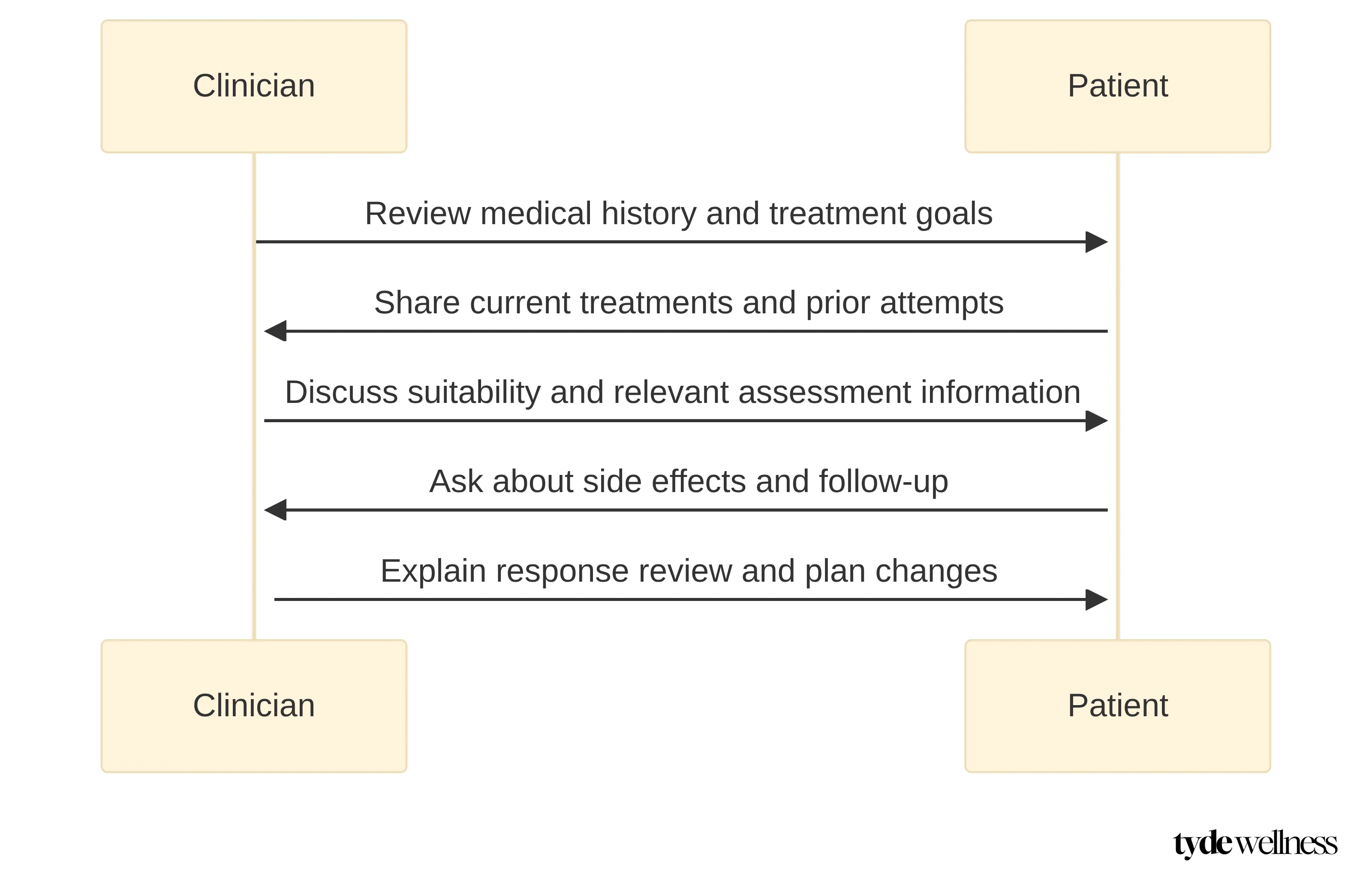
A pre-treatment conversation should give you clear answers to questions such as:
- Which active ingredient and product are being considered, and for what indication?
- How does your medical history and current treatment list affect suitability?
- What side effects should you discuss, and what should you do if they occur?
- What information, measurements, or laboratory results may be relevant to the assessment?
- How will the clinician decide whether the plan is working or needs to change?
- What support will be available between appointments?
The questions do not determine your eligibility. They help you understand what the clinician is evaluating and what decisions remain individualized. A clear discussion should separate three decisions: whether clinician-guided care is appropriate to explore, which product and indication are being considered, and how response, side effects, and follow-up would be handled. Keeping those decisions separate can make it easier to recognize what has been answered, what still requires medical review, and what should not be inferred from a general description of GLP-1 medication.
Treatment response is another clinician question rather than a number to manage on your own. An Endocrine Society guideline says that a patient who responds well and loses at least 5% of body weight after three months should continue medication, while ineffective treatment or side effects warrant stopping it and considering an alternative. That guidance describes a clinical decision framework; it does not tell you to start, stop, increase, or change a medication without the prescribing clinician.
How Perimenopause and Menopause Belong in the Assessment
Perimenopause and menopause belong in the assessment because life stage can change the context in which you experience weight, energy, appetite, sleep, and other health concerns. A life-stage label does not identify the cause of a particular change or determine which treatment suits you. Bring the timing of changes, relevant symptoms, current treatments, and your goals into the conversation so a clinician can consider the whole situation rather than a weight number alone.
Tyde Wellness supports menopause and hormone health, and its platform describes support for women’s wellness during life stages such as perimenopause and menopause. That support does not turn a general GLP-1 explanation into an individualized hormone assessment. If you are navigating a midlife transition, ask how the proposed weight-management plan relates to your other health priorities and which clinician should address questions outside the medication’s intended role.
What to Evaluate Beyond the Medication Itself
A weight-management plan includes more than the active ingredient. The 2026 standard of care says obesity medications should be combined with lifestyle changes, so ask how nutrition, physical activity, sleep, daily routines, and follow-up fit around the medication. You do not need a rigid plan before the first discussion. You do need to know whether the care model addresses the practical conditions that shape how you use and continue treatment. For a practical comparison, look for four connected parts: medical assessment, a clear explanation of the product and its indication, nutrition and activity support, and a defined process for follow-up and plan changes. These checkpoints do not rank one program for every reader; they help you identify whether the service explains the decisions that matter beyond obtaining a prescription.
Behavioral support deserves a careful, non-promotional discussion. In studies using incretin mimetics, support during active treatment was associated with 6.7 kg greater weight loss, with a 95% confidence interval of 2.7 to 10.5 kg, but monthly weight regain was 0.3 kg faster, with a 95% confidence interval of 0.2 to 0.4 kg. After adjustment for initial weight loss, the rate of regain did not differ by support intensity.
Tyde Wellness offers real-time messaging with its care team. Before choosing a program, ask how messaging works, who responds, what topics can be handled between visits, how follow-up is scheduled, and what happens when your plan needs review. A clear communication process is a practical feature to evaluate, not proof of a particular result.
Why Long-Term Management Belongs in the First Conversation
Long-term management belongs in the first conversation because stopping treatment can change what happens after initial weight loss. A systematic review also reports significant weight regain after GLP-1 receptor agonist treatment ended in trials including STEP 4 and SURMOUNT-4.
A plan for treatment duration should be specific enough for you to understand the decision points. Ask what the clinician will assess before continuation, what may prompt a change, how side effects will be handled, and what follow-up looks like if treatment ends. The systematic review noted that evidence tracking weight beyond one year after discontinuation had been limited at the time of its analysis, so long-term planning should include uncertainty rather than a fixed promise about what will happen.
A weight-loss goal does not automatically mark the end of medical decision-making. The Endocrine Society guideline uses response and side effects as reasons to continue, stop, or consider an alternative, while the 2026 standard says individual responses vary. Ask how your plan will address maintenance, changing goals, and treatment response over time. Do not treat a published average or a milestone as an instruction for your own care. Long-term management can involve more than deciding whether weight has changed: it can also include reviewing tolerability, deciding whether the current approach remains appropriate, and knowing what happens if treatment is ineffective or ends. For people with diabetes and overweight or obesity, the 2026 Standards of Care describes chronic obesity pharmacotherapy as continuing beyond weight-loss goals when indicated, while the clinician must still weigh benefits and risks.
What Current Information Is Still Needed Before You Decide
The information you still need is specific to the product and the clinical plan, not just the GLP-1 label. Ask the clinician to explain:
- The active ingredient and the treatment indication.
- Whether the proposed medication is FDA-approved or compounded, and what you should confirm about its status with the clinician or program.
- Which population and outcomes the supporting studies involved.
- How your health history and current treatments affect suitability.
- What side-effect questions require prompt contact with the care team.
- How follow-up, response assessment, and changes to the plan will work.
- How long-term management will be discussed if treatment helps or does not help.
These questions separate a medication category from a decision about your care.
Cost and access also need direct answers before you commit. Ask what you would pay for the consultation, medication, follow-up, and any added support; whether those costs are separate; how payment works; and what happens if the plan changes. Also ask whether the cost and access details apply to an FDA-approved or compounded medication, and what you should confirm about that status with the clinician or program. Ask how quickly you can reach the care team and what steps occur after the initial inquiry. A program cannot be assessed from a medication name alone when the practical process affects whether you can continue it.
Uncertainty is part of an informed decision, especially around personal response and treatment after discontinuation. Trial populations and study designs differ, and a systematic review found that weight regain after GLP-1 receptor agonist treatment ended was a real consideration. You can still make a structured choice: identify the exact treatment being discussed, list the questions that affect your suitability, understand the support and cost, and decide whether a clinician-guided assessment is worth pursuing.
How to Prepare for a Clinician-Guided Discussion
A clinician-guided discussion becomes more useful when you bring organized information rather than relying on memory. Before a consultation, Tyde Wellness’s preparation guidance recommends gathering:
- Your medical history, current treatments, and prior weight-management attempts.
- Questions about the medication, its possible side effects, and how it fits your goals.
- Your current weight, height, lifestyle habits, and any relevant recent measurements.
- Laboratory information if the clinician asks for it.
Keep the list factual and practical. You do not need to decide your diagnosis or medication before the appointment.
Your personal context should be part of that preparation. Note whether you are navigating perimenopause, menopause, postpartum changes, or another major shift in routine, and write down the questions you want addressed. Tyde Wellness supports menopause and hormone health as well as GLP-1 and non-GLP-1 options for weight loss, but a clinician still needs to determine which concerns belong in the assessment and how they relate to your goals.
A productive discussion should end with a clear next step, not pressure to make an immediate treatment decision. Ask what information is still needed, whether the proposed plan requires further review, how response and side effects would be assessed, and when you should expect follow-up. If treatment is not suitable or does not work as intended, the Endocrine Society guideline supports considering an alternative rather than continuing an ineffective or poorly tolerated approach without review.
What Tyde Wellness Describes as Its Care Options
Our platform brings together board-certified obesity-medicine providers and nutritionists to support women’s wellness, including during perimenopause and menopause. That description explains the people and focus involved in the care model; it does not establish that you qualify for a medication or predict your outcome. The appropriate discussion still depends on your history, current treatments, goals, and the clinician’s assessment.
Tyde Wellness may be worth exploring if you want to begin with an eligibility discussion that includes your medical history, current treatments, previous weight-management efforts, and questions about medication and support. Prepare those details before you start, then use the clinician conversation to learn whether one of those options is appropriate. An inquiry is a step toward information, not a promise of eligibility, access, or results.
Interpret GLP-1 Weight-Loss Evidence Before You Decide
Interpretation also includes treatment context. A 2026 standard-of-care source says obesity medications should be combined with lifestyle changes; medication and lifestyle contribute to total weight reduction, and individual responses vary. When a study includes that combined approach, its reported total should not be read as a medication-only expectation.
What Should You Ask Before Exploring GLP-1 Care?
How do GLP-1 medications contribute to weight management?
GLP-1 medications may aid in weight reduction when used as part of a comprehensive medical plan that includes lifestyle changes. They are not standalone solutions but should be integrated with nutrition and physical activity for effective weight management.
What should I consider before pursuing GLP-1 treatment?
Before pursuing GLP-1 treatment, consider your medical history, current treatments, potential side effects, and how the medication fits into your overall weight management strategy. Discuss these factors with a clinician to determine suitability.
What support does Tyde Wellness offer for weight management?
Tyde Wellness provides personalized medical weight-loss services, including GLP-1 and non-GLP-1 options, support for menopause and hormone health, and real-time messaging with a care team to assist clients throughout their weight management journey.
How can I prepare for a consultation regarding GLP-1 treatment?
To prepare for a consultation, gather your medical history, current treatments, previous weight management attempts, and any questions about the medication and its side effects. This information will help facilitate a productive discussion with your clinician.
What should I ask about the costs associated with GLP-1 treatment?
Inquire about the costs for consultations, medications, follow-ups, and any additional support. Understanding the financial aspects is crucial before committing to a treatment plan.

